Thursday, March 22, 2012

My Mr. Coffee Moment

Reading this story today about the death of Mr. Coffee co-founder Samuel Glazer gave me a moment of pause: I was reminded yet again how many of the ubiquitous details of modern life are surprisingly recent innovations. Mr. Coffee first introduced automatic drip coffee machines — long a staple in commercial kitchens — to the home market in 1972, when I was just finishing up middle school1 and getting ready to start high school. In short order, the big percolators that had been the sine qua non for parties and holiday meals at my house and the homes of my parents’ friends essentially disappeared, and the market position of instant coffee took a serious hit. By now, the drip coffee maker is such a universal in the home kitchen that walking into a kitchen that didn’t contain one would seem freakishly odd.

Technological change is constant and continuous, of course: I don’t mean to suggest that any one invention (and certainly not something as cosmically small as a new style of coffee maker) is a watershed. But, perhaps because change is constant, with epochal changes accumulating in tiny daily increments, it sometimes catches me by surprise when I’m reminded how terribly new so much of the world I live in really is. It’s not so much a matter of the “shock of the new” as it is the shocking newness of the commonplace.

Watch an old movie, and find yourself wondering why the imperiled protagonist doesn’t simply call for help using a cell phone or Google the answer to their problem… and then remember that most people didn’t have cell phones or Google back then… and then take in the realization that the “back then” represented in this “old” movie is no more than 10 or 12 years ago! The technologies behind cell phones, computers, digital television, etc., may have been invented decades ago, but the extent to which they define the fabric of daily life for ordinary people is, from any sort of an historical perspective, instantaneously new: It’s essentially all happened within my adult life, and much of it has happened during the lifetime of my daughter, who will graduate from college this year.

Back in the early 70s, when Samuel Glazer was helping revolutionize home coffee making, microwave ovens and electronic calculators were making their way into homes (I remember what a revelation the 4-function, single-memory desktop calculator my dad brought home was, compared to the neighbor’s electromechanical adding machine). My father brought home an Ericophone handset at a time when owning your own phone (as opposed to renting it from the phone company monopoly) was still an exotic, legally grey activity, and pushbutton phones and home cordless phones (complete with walkie-talkie style telescoping metal antennas) were on the bleeding edge. Widespread adoption of cable television (“pay for TV?!?!”) was still more than half a decade in the future, as was the advent of home videocassette recorders (now, of course, themselves made extinct by the DVR and streaming internet video). The Apple ][ computer wasn’t released until 1977 (I bought my first, a 48k RAM Apple ][+, in 1982), and the original IBM PC not until 1981, but the computer-as-we-know-it has even later roots: the Apple Macintosh in 1984 and the first truly useful versions of Microsoft Windows not until the early 90s. I saw my first cell phone — an expensive, large-ish box permanently installed in the car of a privileged student at the private high school I taught at — in 1984, but it wasn’t until well into the next decade before the phenomenon of mobile phones in the pockets of the middle class began to be widespread.

Commercialization of the internet and widespread private access to the World Wide Web began around 1995, before which most people’s online experience, if any, was limited to proprietary membership services such as CompuServe, Genie, Prodigy, and America Online (AOL), accessed through glacially slow dialup modems. Only after the turn of the millennium, with the build-out of digital cable, DSL, and direct-to-home satellite services, did high-bandwidth, always-on internet access become commonplace. And, of course, smartphones and tablet computers, in which the telecommunications and computing streams are finally fully integrated, are barely out of metaphorical diapers.

And there you have it: The world we2 live in, constantly connected to a rich matrix of information, media, and communications (not to mention all the other technological and social innovations not directly related to the information technology revolution) is younger than this year’s college seniors. And yet… from moment to moment and day to day, it often seems as if it has always been this way.

Just like there has always been a Mr. Coffee machine in the kitchen.

1 Junior high school, in my actual case, but that term seems to be disappearing, along with junior college.

2 I’m admittedly using a fairly privileged version of we, here, but the world I describe is increasingly the cultural matrix for even the less privileged, at least throughout the so-called first world.

Wednesday, March 21, 2012

Another Cheap Shot Republican Sex "Scandal"


I don’t know much of anything about Neil Livingstone, and there are probably lots of perfectly good reasons the Republican counterterrorism expert and "international risk management" consultant shouldn’t become governor of Montana (Hell, according to me, there are plenty of good reasons most Republicans shouldn’t become governor of any state)… but the fact that an out-of-print book of his included safety tips for travelers who patronize prostitutes isn’t one of them.

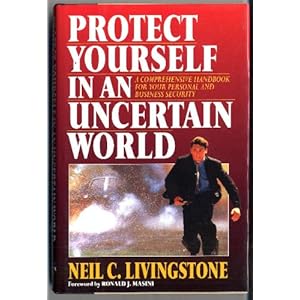
Livingstone’s 1996 book Protect Yourself in an Uncertain World: A Comprehensive Handbook for Your Personal and Business Security reportedly includes a chapter on nightlife that deals with “adult entertainment districts.” The chapter begins with…
I do not recommend that you indulge in illicit pleasures such as gambling, drugs, or prostitution, but experience suggests that many people, despite the risks, do so. This chapter is designed to help you minimize the personal risks involved, especially when you are traveling in a foreign country.

…and there’s no reason not to take that preface at its face value: In the same way that many travel guides give cautionary advice about how to stay out of trouble over certain kinds of risky/illicit behavior (namely sex and drugs and, in some cases, even rock and roll) in foreign lands, it’s hardly surprising that a book like Livingstone’s would give advice on how to stay out of trouble while doing the kinds of things many travelers actually do, regardless of anyone’s moral attitudes about those activities. Especially considering that in many of the places Livingstone’s readers might find themselves, prostitution (along with other “adult nightlife” activities) is not actually illegal.

Because Republicans are generally sanctimonious and priggish about human sexuality, and have been increasingly intensely so recently, it’s tempting to leap on any whiff of a Republican sex scandal. Too tempting, I’m afraid: For us to indulge in kneejerk sexual shaming of Republicans actually reinforces the very sex-negative predisposition that’s at the heart of so much of what’s wrong with Republican ideology.

If there were evidence that Livingstone had promoted illegal prostitution, that would be a scandal; if there were evidence he’d merely patronized prostitutes himself, that might or might not be (I’d be inclined to say not, unless there’s a direct connection to his performance of a public trust); but on the “evidence” of a few excerpts from an old book, it’s not only not a scandal, I’m not sure why it’s even a story.

I've made a similar point previously in these pagespixels regarding attacks on Rick Santorum and Newt Gingrich. For all I know this Livingstone character is as nasty and dangerous a piece of work as those two, but the point remains: When we engage in this kind of sniggering and shaming, we're validating the puritanical frame that's so much of what's wrong with our Republican opponents.

Let's not, shall we?

Fighting Idiocy With Humor?

In an effort to point out the patent absurdity of those who oppose same-sex marriage rights, a New Hampshire state representative has sponsored an amendment that would forbid left-handed people from marrying.

I literally laughed out loud when I saw this, but… is it too elitist and condescending of me to worry that these sorts of reductio ad absurdum acts of protest legislation will be lost on their target audience?

“I’m using humor to make a point,” the Concord Patch website quotes Canterbury Rep. Seth Cohn (a “liberty-minded Republican with a wry sense of humor”) as saying. “And when I get up there, believe me, there will be a point made. I’m trying to sway people’s opinions and using humor is one way to do it.”

Maybe so, but I fear that efforts like this, or the mandatory rectal prostate exam amendments that some have proposed as a flippant counterpart to the mandatory trans-vaginal ultrasound provisions abortion opponents have promoted in Virginia and elsewhere, will be lost on the sort of people who could propose the laws being protested with a straight face in the first place. Even though these proposals look like a biting satirical response to some of us, to how many others will they seem just silly… or, worse yet, a facile trivialization of an important issue?

Make no mistake: The underlying principle that unites all these fights over gay rights, contraception, abortion, and (if Rick Santorum gets his way) pornography — the right to personal sexual autonomy — is a matter of vital concern. I wish I thought we lived in a political culture in which it’s safe to joke about this topic; I’m worried that we do not.

[UPDATE: I should clarify that I don't mean to be dissing humor and satire, per se, as political tools; I only worry that this particular sort of satirical stunt can sometimes be counterproductive.]

Monday, January 30, 2012

Fun With Lists: Most Talented Sports Families

During my daily peregrinations through teh intertooooooobz, I came across this list of all-time great sports families, which I thought would amuse a buddy of mine at work. While I was in the process of laying out my own opinion of the choices for him, it occurred to me that they might also amuse my readers here (if any). So, without further ado...

A few thoughts of my own:
  • I object to the inclusion of fictional characters in this list, even if some of them were played by real-life hockey players.

  • I object to the inclusion of professional wrestlers… oh, wait, I already objected to the inclusion of fictional characters, didn’t I?

  • If we are going to have professional wrestlers, where are the Von Erichs? The Funks? Hell, where’s the McMahon family? (Don’t ask me how I knew about all those folks!)

  • I object to the inclusion of racehorses on this list, not for the usual “they’re not human, so it’s unfair to compare them to human athletes” reason that’s usually given for griping about horses on these sorts of lists (valid though that is), but because horse racing is all about bloodlines, so the whole notion of a “talented family” is kind of moot: With very few exceptions, every champion racehorse is part of a “talented family.”

  • If we are going to have racehorses, where’s the Man ‘o War/War Admiral/Affirmed lineage?

  • I object to the presence of MMA fighters: Human cockfighting… er, I mean MMA… is not a sport.

  • Including the Yao family is kind of a cheat: We only know about them because Yao Ming was an NBA star; how many other families in China… or all over the world… would also be on this list if it weren’t U.S.-centric. No doubt there’s some 5- or 6-generation family of cricketers who would be No. 1 on this list with a bullet, if only anyone in ‘Murrica had ever heard of them. I don’t object to the U.S. centrism, but it makes the Yaos a poor choice for inclusion, since only one of them has any presence in U.S. sports. (The Bulgarian soccer goalies probably don’t belong, either.)

  • Bob and Mike Bryan probably belong on the list, and Venus and Serena Williams certainly do, but where are John and Patrick McEnroe? John may be mostly remembered for his mercurial singles play and his volcanic temper, but he was also arguably the greatest doubles player of his era (and one of the greatest of all time), winning 9 Grand Slam titles in men's doubles and one in mixed doubles, and he was also possibly the greatest American Davis Cup player. Patrick was much less successful as a player (though he did win a Grand Slam title in doubles), but he's been a major contributor to tennis as a team captain (Davis Cup for 10 years, and the 2004 Olympics), a team owner (World Team Tennis), and a TV commentator/analyst.

  • How cool is the name Ignatius Gronkowski (great grandfather of Rob and his brothers)? And how cool is it that he was an Olympic cyclist in 1924 (aka the Chariots of Fire games)?

  • Leon Spinks has a grandson who’s a boxer? Dog, I feel old now!

  • Who knew that Jackie Robinson’s brother finished second to Jesse Owens in the Olympic 200m? Cool, eh?

  • Muhammad and Laila Ali? SRSLY? Muhammad Ali by himself belongs near the top of anyone’s list of all-time athletes, but are we really taking women’s boxing seriously enough for this to count as a top-ten sports family?1

  • I actually saw the three Howes play together for the Houston Aeros (the old WHA ones, not the current minor-league ones).

  • I know there’s not much space above No. 5, but shouldn’t the Andrettis be higher on this list?

  • No. 2 is a pair of identical-twin lacrosse players? Lacrosse?? I don’t care if they are the greatest players in the sport’s history… it’s frickin’ lacrosse. Yeah, Jim Brown yadda, yadda… it’s LACROSSE! Wilt Chamberlain played volleyball; that didn’t get a pair of volleyball twins on the list, never mind at No. 2! Dump these guys and move the Andrettis to their spot.


1 Anyone tempted to read this as me dissing women's sports would be wrong; this is me dissing boxing. I only just barely take men's boxing seriously, and only then because its long history means it's "grandfathered in." Starting up a whole new branch of the sport in the late 20th century was just silly... and the more we learn about the effects of head trauma in sports, the sillier it seems.

Thursday, January 26, 2012

If Only It Weren't Newt

The first thing you have to know is that I’m a huge space cadet myself. Born in the dawning years of the Space Age, I was a starry-eyed 9 year old when Neil Armstrong and Buzz Aldrin landed on the moon, watching every second of the televised EVA, and then immediately watching every second of the replay. I remember my dad — a NASA engineer — bringing home vacuum-formed relief maps of the Apollo landing sites, on which we would trace out moonwalkers’ progress in mechanical pencil. So you should know that there’s nothing I’d rather see than the achievement of the visionary space goals Newt Gingrich laid out in Florida on Wednesday: A permanent presence on the moon, accelerated human missions to Mars, breakthrough interplanetary propulsion technology….

Nothing, that is, except a well-functioning, just, humane, and prosperous American society here on Earth, and that’s where I fall off Newt’s high-tech sled.

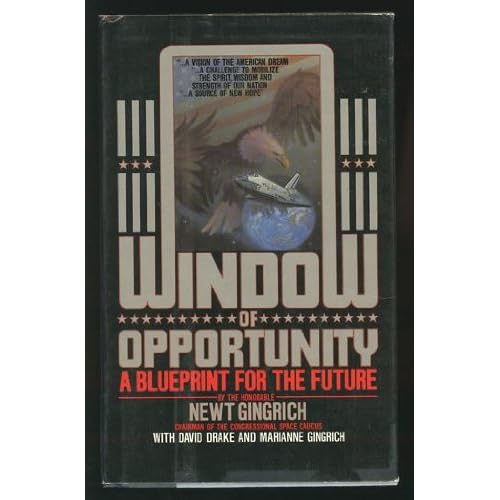
I don’t doubt the sincerity of Newt’s interest in this area: As Mother Jones reminds us, Newt’s fascination with “grandiose”1 space ideas isn’t new: As early as 1984 he sponsored a bill that would have “offered a path to statehood for future space colonies,” and the first of his many books, Window of Opportunity, focused in part on space exploration as a key to building a Gingrich-approved future. And I don’t doubt that the goals he sets out are possible: Notwithstanding the quixotically negative comments from space advocates on blogs and news stories, there’s no doubt in my mind that, given the political will and national commitment we displayed during Kennedy’s moon quest, we could, in fact, plant an initial permanent lunar base by 2020: We haven’t gotten stupider since the days of Apollo, and now we have a half century of spaceflight-related technology that wasn’t available to engineers and program managers in 1961, when JFK established an 8 ½ year deadline for the first lunar landing by humans.

What we don’t have is a world in which humans on the moon or Mars is — or should be — anywhere near anyone’s first priority. At the philosophical level, I’ve never bought the “why spend money in space when we have problems here on Earth” line of opposition to space exploration: A great nation has to be able to do more than one thing at once, and the life of a whole society shouldn’t be reduced to nothing but problem solving. But I do believe in establishing reasonable priorities, and I believe that committing large chunks of our shared resources to a project requires the project to be somehow integrated with the nation’s larger priorities. In the 50s and 60s, our priorities were, for good or ill, focused on the geopolitics of superpower competition, and the Apollo effort neatly served that priority.

But today our top priorities should… indeed, must… be focused on building a ethically and economically just society, and on rebuilding our beleaguered middle- and working-class economy… and I’m pretty sure that’s not what Gingrich has in mind. It’s possible to imagine an Apollo-level space exploration program structured in ways that would be relevant to those goals, but the very things that would make it relevant — public investment in dual-use technologies, multipurpose infrastructure, related job creation, and public education at all levels — are anathema to today’s Republicans. Gingrich might be a technocrat, but he’s a Tea-Party technocrat.

And even if Gingrich’s space proposals struck me as perfect, the fact is that everything else he stands for, and that the party he would lead into Washington stands for, would be disastrous, from my point of view. I can’t hope for a bad president just because he might be good on my one pet issue. In my previous (online) life, I used to be a regular reader/contributor at several space policy forums, and I recall my fellow regulars discussing whether Bush or Kerry would be better for advocates of space exploration. I couldn’t believe it was even a question: With war, terrorism, fundamental tax policy, and basic questions of civil liberties in the balance, I couldn’t believe that anyone, on either side, would even think of basing their vote on space policy. Show me a candidate who proposes the same space goals as Gingrich has within the framework of a humane, truly progressive agenda, and I’ll instantly vote for that candidate… but odds are good I’d’ve been voting for the humane, truly progressive agenda in any case.

And so should you.

1 Since he styles himself as an intellectual, Gingrich should know that grandiose isn’t really a compliment. Many of Gingrich’s pronouncements may in fact be grandiose, in the sense of “affectedly grand or important; pompous,” and many of his plans may be grandiose, in the sense of “more complicated or elaborate than necessary; overblown,” but… ”You keep using that word. I do not think it means what you think it means.” And don’t even get me started on people who say simplistic when they mean simple!

Saturday, January 21, 2012

A Bad Week for Sex in the News

So does it surprise anybody that the Republican presidential nomination contest is focused on sex? Beyond the "guilt-by-association," slut-shaming stories about Karen Santorum's youthful affair with an abortion-friendly obstetrician (which I've already addressed), we've heard Newt Gingrich's third (and current) wife attacked as a "mistress" while his second wife is quoted as claiming Newt asked her for an "open marriage."

The problem with all this is not that it gives Republican candidates a bad name — they're pushing hateful, evil policy ideas based on a hateful, evil ideology, and they deserve as bad a name as they can get — nor that they are false: AFAIK, Karen Santorum did shack up with a much older doctor for years, and Callista Gingrich manifestly was Newt's long-time mistress, and while characterizing what Newt was asking for as open marriage is deeply problematical (just ask Dan Savage or JT Eberhard's co-blogger Christina), I have no doubt that conversation took place, no matter how vigorously Newt whines at being asked about it.

No, the problem is that all this Republican sex obsession is that it gives sex a bad name... and that really is undeserved. It's also indicative of something deeply troubled about our politics: The fact that they choose sexuality as the weapon with which they shame and attack each other reflects the sense — false, IMHO, but woven deeply into the fabric of our culture — that pleasure, and sexual pleasure in particular, is corrupt and immoral. This ultimately religious commitment to the idea of the innate depravity of the flesh contributes to the right's attacks on gay rights, women's reproductive right, and general freedom of sexual expression. More indirectly, I think it contributes to the broad meanness of right-wing policies.

But it's not just politics: Yesterday I read a sad little story about a woman who offered sex in return for a McDonalds drive-thru customer's order of Chicken McNuggets. The woman, Khadijah Baseer, described in reports as being "known as a local panhandler [emphasis added]," apparently was opening customers' car doors, I assume seeking food or cash. One man called the police and complained that she'd offered him sex (some sources say oral sex) in return for his chicken bits.

So the most parsimonious interpretation of a woman offering sex in return for a couple dollars worth of food is that she's desperately poor, right? Or starving, or mentally ill, or strung out on drugs, or perhaps some combination of all of the above? Certainly she requires some sort of assistance, right?

So what did the cops do? They arrested her on suspicion of prostitution. Because it seems so likely that an actual prostitute would take payment in processed chicken. And because this woman is so much more likely to be a threat to society than someone who needs society's help.

Or maybe it's just because any story that has sex in it has to have a slut. It makes me sad that we think this way.

Tuesday, January 17, 2012

The Fact That I Despise Rick Santorum Doesn't Justify This

I think Rick Santorum is wrong — dangerously wrong — about almost everything. I think his ideas are authoritarian, reactionary, and deeply inhumane (to the point of being hateful), and I’m tempted to cheer anything that harms his ability to assert political or social power… but even so, I can’t help thinking this story, from Newsweek by way of The Daily Beast, is unfair, on several levels.

First, as eager as I am to catch Santorum out as a hypocrite, that he was (according to the details embedded in the text) less devout, and less committed to Catholic social doctrine, as a young man than he is now doesn’t automatically make him one, anymore than the fact that I voted for Reagan as a callow youth makes my current commitment to liberalism hypocritical. People change their minds, particularly over the span of decades, and there’s nothing wrong with, nor intellectually dishonest about, that. In general, the ability to modify one’s ideas and beliefs over time is a good thing… though it’s unfortunate (to put it mildly) that Santorum has apparently been busily changing his mind in the wrong direction.

But this story goes much further, into the realm of guilthypocrisy by association… by double association, actually: It seems that when Santorum’s wife Karen was a young, single woman, she dated a doctor who, among other things, provided abortions. Really? The fact that a politician’s wife’s ex-boyfriend from decades past had an occupation the politician now vehemently opposes is supposed to add something to the current debate? It’s sufficient that Santorum’s positions on reproductive rights are dangerous and hateful; who his wife used to sleep with is immaterial to the debate.

Ahh, who she used to sleep with; there’s the rub. Because even beyond the issue of hypocrisy by association, this story is troubling on a much deeper level: It’s red-letter slut shaming.

Even if you thought the old boyfriend’s abortion history was relevant to current politics, why would we need to know that this was a case of a young nursing student not just dating, but living with a much older doctor? Why add the vague whiff of symbolic incest by mentioning that he had actually delivered her as a baby? Why repeat his (likely self-congratulatory) memory that she came on to him, inventing (as he imagined it) a fear of the dark in order to move herself from a chaste basement apartment to his bedroom? Would any of this have been a story worth telling if it were the much-less-titillating tale of going on a couple dates with an obstetrician near her own age whom she met at school?

None of these details has a single thing to do with evaluating or criticizing Santorum’s stand on abortion; they have everything to do with the smug glee of tagging a sanctimonious moralist with a “slutty” wife. Much as I like to see sanctimonious moralists tagged as sexual hypocrites, this is unfair to him, and viciously unfair to his wife. Worse, shaming Karen Santorum for her past sexual activity partakes of the very same obsessive sexism and sex-negativity that is at the root of what’s hateful and awful about her husband’s politics, and that haunts our society.

We can’t fight this shit — and we must fight it — by indulging in it ourselves.

Thursday, January 12, 2012

Gay Marriage Kills Jobs? SRSLY??

Recently one of the Republican presidential candidates (Rick Santorum? They don’t pay me enough to keep up with which wacky idea goes with which awful candidate…) suggested that same-sex marriage was a job killer. Not that a position that ludicrous really requires any response, but I couldn’t help thinking of it when I read this story about a gay wedding expo in Brooklyn. Last I heard, holding a frickin’ trade show was not a sign that a particular activity is bad for business!

As Event Director Daniel Brooks explains, “It's a new niche for businesses [emphasis added] .” And would Brooklyn Borough President Marty Markowitz sound like this…

I am thrilled that Brooklyn — proud home of everyone from everywhere, including one of the nation’s largest lesbian, gay, bisexual and transgendered populations and certainly the biggest lesbian community in the country — will be the location of the first ever major expo of its kind in New York City.

…if he thought same-sex marriage was killing jobs in his community?

It’s one thing if people on the right have what they believe to be principled objections to same-sex activities, based on their religious or philosophical beliefs… but anyone relying on desperate, transparently false arguments like this “job killing” business is not principled, but is either hateful enough to resort to any means to damage their enemies, or is willing to blatantly lie to grab political power (by, it must be said, pandering to hateful people).

Friday, January 06, 2012

Rollercoaster News Reading

My first reaction to this Huffington Post story, the front-page headline of which referenced only sex-shop purchases and not the issue of misspent taxpayer funds (at least it did when I first saw it; it's apparently not linked from the front page at all anymoree), was “so what if he bought something at a sex shop? People have sex, and there’s nothing wrong with that.” Then I saw that the story was about a mayor improperly taking about $154 thousand in improper expense payments (he owes the town about $170 thousand, but that includes interest and investigative costs), and I thought, “well, there’s certainly something wrong with that.” Then I noticed that the sex-shop complaint only accounted for a relatively trivial $67 of the total (about 0.04 percent, if my cypherin’ is correct), but… OMG! It was at a gay sex shop, and, setting aside the misappropriation of public funds, there’s nothing wrong with shopping at a gay sex shop, per se.

Now, my own town is in the midst of a controversy regarding a former mayor who paid himself — improperly, many of us believe — a big chunk of self-determined extra compensation, so I’m far from sympathetic to mayors who dip into the public till. And while Jackson, Miss., mayor Greg Davis doesn’t need to apologize to anyone for being gay, he does need to apologize for hypocritically hiding behind the façade of a straight (married) “conservative” lifestyle for purposes of getting elected (and, in 2008, running for Congress). He probably should resign, as it appears Jackson’s Board of Aldermen may ask him to do today. All that said, though, highlighting a $67 purchase at Priape (even briefly) as the headline, instead of the tiny, relatively unimportant detail is actually is, strikes me as pandering to both sex-negative and homophobic impulses.

Shame on you, HuffPo!

Quick Take: Odd Radio Jokes

Listening this morning to the podcast of last week's Car Talk, a stray thought occurred to me: The list of joke "staff" names they close the show with is really a very odd, inverted joke for radio, because it's essentially a visual trick.

How each name sounds is actually the punchline of the joke; how it looks is the setup. That is, their Customer Service Specialist has what looks like a perfectly cromulent name: Begonia Payne-Diaz. It's only when it's said aloud that you realize it's begone, you pain in the ass.

Except, of course, that the radio (and podcast) audience never sees the name, but only hears it. In effect, we get the punchline of the joke first, and then have to infer the setup. It's upside down.

And yet, somehow, it's hilarious (at least to me). The fact that this bit totally works on radio, even though it totally shouldn't, is almost as weird as the fact that Edgar Bergen became a star on radio... er, what's that? Who's Edgar Bergen? A great ventriloquist... y'all might know him as Candice Bergen's father... um, who's Candice Bergen?

Oy, it's hell getting old! Oh well, here... and here. ;^)

Wednesday, January 04, 2012

Who Knew Matt Lauer Was So Shockable?

I'm a bit bemused at Matt Lauer's reaction to this story about private "suites" in First Class on Singapore Air's A380 jumbo jets. If the compartments are truly private, as both the headline and the story describes them, why shouldn't couples do what couples do? And why would they need "chaperones"?

Geez, Matt, you have "don' it wif' a lady" haven't you?

Call Off the Dogs!

Despite my somewhat dire expectations, my upgrades — from 1 to 3 Gb RAM and from Mac OSX 10.4.latest to 10.6.latest — went very smoothly; it's just Daily Life™ that seems to be tripping me up. Not that anything has gone off the rails in that regard, either, really; I'm just readapting to the post-holiday routine less efficiently than I'd hoped. Sad when it's only 4 January, and you're already a week behind on New Year's resolutions, eh?

Well, one way I hope to meet my goal of posting more often is relying on short postings and links instead of tl;dr essays1, so let me start by adding to my New Year's "intentions" a reboot of my long-dormant hobby astronomy, starting with observing as many of these events as I can.

I've already missed the Quantarid meteor shower (I did go outside last night at about the right time, but it was wicked cold, so I didn't stay long or see anything), and most of the eclipses are outside my geographic range (unless I win the lottery), but I'm going to shoot for as many of the others as I can, and I'm determined not to miss the transit of Venus.

And while I'm on space stuff, how cool is this?


1 Don't worry; I'm sure there'll be plenty of those, too!

Friday, December 30, 2011

If You Don't Hear From Me by Monday...

...send a St. Bernard with a cask of brandy to look for me! I'm getting ready to do a memory/system software upgrade on my computer, and I can only hope I'll find my way back. Wish me luck!

New Years... er, Intentions

OK, so I'm getting a couple days' jump on the whole New Years resolution thing, but I just wanted to drop in a placeholder to say that I'm reanimating the shambling corpse that is this blog. I know better than to make promises, but my hope for the coming year is to post here at least twice a week, and to do the same at my other blog, Emerging Foodie. In addition, I hope to...
  • Go to the gym at least 4 times a week
  • Read more fiction
  • Listen to more music
  • Get back into model rocketry

What I'm going not do to make space in my busy schedule for all of this is yet to be determined, of course! ;^)

For now, I'll leave you with this: For reasons that don't bear mentioning, I ended up listening to an hour of right-wing radio this morning, and it seemed that about half the airtime was taken up with ads for get-rich-quick schemes and debt consolidation... which leads me to wonder: If right-wing listeners are so hard up for cash, why do they keep voting for candidates and policies that slam their very own middle-class lives in favor of the already wealthy?

Monday, March 28, 2011

It's Not About How Much The Bullets Cost

Since the President committed U.S. military forces to participation in the international effort to prevent the slaughter of rebels in Libya, much of the criticism, from all points of the political spectrum, has focused on the cost of the action, and its impact on the federal budget... and a good percentage of that discourse has been frustrating to me.

I don’t propose to take a position here for or against the military action per se — it’s not that I don’t have a position, of course; it’s just that I want to focus on one specific issue, and not distract from my own point — but I do want to take on the notion that our current budget woes are a good reason to either support or oppose the Libya involvement. I think they are not, for two reasons:

First, I may be mistaken, but I believe that by far the largest percentage of the cost estimates to date is made up of the cost of the munitions expended. To be sure, there must be some incremental cost from the logistics of moving troops and equipment around... but so far, there hasn’t really been time for much of that. And there’s also no doubt been some additional personnel costs, from reservists and National Guard troops called up, and from combat pay increments as well. But I’m pretty sure that most of the cost to date has been the cost of the “bullets” we’ve fired. I used those quotation marks because we’re not talking about actual bullets, but complex, expensive weapon systems like cruise missiles, air-to-ground missiles, and smart bombs. Unlike actual bullets, you don’t pay for these things as you use them, and you don’t run down to Cabela’s with cash in your pocket to replace them right after using them, either. These expensive weapons have long production lead times, and are (AFAIK¹) purchased in production lots that are contracted for years in advance.

So the tens and hundreds of millions of dollars these weapons represent has already been spent, years ago, at the time they were produced, and the cost of replacing them will be spent — if they are, in fact, replaced — years from now. That’s not to suggest that there’s no cost to using these weapons, of course, but the suggestion, implicit in so much of what I’ve been reading, that they compete directly with current federal spending is way too simple: If a particular missile in our inventory cost a million dollars to acquire, it does not mean that we’ll have a million dollars more in the federal coffers tomorrow if we just don’t fire that missile today. The “we could’ve spent these hundreds of millions on education and infrastructure instead” argument is... not exactly wrong, but too simplistic to be truly meaningful. And this comes from someone who’s desperately eager to see more spending on education and infrastructure.

My second objection to the cost-based criticism is more philosophical: Military action is immensely consequential in moral² terms, and to base the decision to employ deadly force — or not to, in the face of a compelling moral imperative — on mere affordability strikes me as horrific. Nations should base the use of military force on clear national interests (which, literalists and isolationists notwithstanding, often include humanitarian and multinational goals), and the choice should be made in a moral context. I don't imagine anyone would advocate that we embark on military actions simply because we can afford them, without regard to what's right; by the same token, holding back because of cost when action is morally required is also unthinkable.

There is surely an important choice to be made — and regularly revisited — regarding what share of our common resources ought to be devoted to military preparedness. But this guns versus butter debate is at the macro level and over an extended timeline. When deciding, in the immediate historical moment, whether or not to put the military force we possess to use, cost should be the least of our concerns.


¹ Personally, I have more awareness of the production cycle for durable weapon systems like fighter planes, but I believe what I say holds true for expendable munitions, too, at this level of complexity. Cruise missiles, at least, are essentially self-piloting kamikaze aircraft, not substantially less complex than many piloted craft.

² Please understand that I use moral in a strictly secular sense; nothing here should be construed as recommending any sort of religious test for military action.

Wednesday, March 23, 2011

How Easily We Forget

This morning when I noticed the online headlines announcing Elizabeth Taylor's passing, I was too busy with work to read a celebrity obit. It took a tweet from my daughter to remind me that Taylor was more than just a much-married Hollywood star, she was a pioneering AIDS activist. The Founding International Chair of the American Foundation for AIDS Research (amfAR) and creator of her own personal foundation, with on the order of $50 million of personal fundraising to her credit, Taylor was one of the first celebrities to speak out about AIDS in the 80s (at nontrivial personal and professional risk)... and decades later she was still working, bringing equipment and care to the HIV/AIDS community of New Orleans in the wake of the Katrina disaster.

In the wake of a glittering, sometimes apparently tawdry and superficial life, it's easy to forget this other dimension¹... but Taylor knew her celebrity came with responsibilities, which she discharged with courage and commitment. Requiescat in pace.

¹ Of course, the execrable Fred Phelps and his so-called church hadn't forgotten. I wonder if the time hasn't come when being picketed by these Westboro thugs shouldn't be seen as a badge of honor.

Wednesday, February 23, 2011

Thoughts on Wrestling Girls

Last week I commented on Facebook about the story of Joel Northrup, opining that while he probably thought he was being noble and moral when he chose to forfeit his shot at a likely state championship in wrestling rather than wrestle female opponent Cassy Herkelman, I thought he was "just being a sexist jerk." I got pushback from some of my Facebook friends, who said it was his choice to make, and that I was being harsh.

Well, I've been thinking about it. Of course, in the sense that nobody has the right to force a kid to wrestle if he doesn't want to, I agree that it was his choice to make. And I probably was too harsh in using the word jerk: He almost certainly intended to be acting honorably, according to the values he's been raised with. But "intentions aren't magic," and the more I think about it, the less I'm inclined to back off from calling this move sexist. Here's the thing: I believe it's poor sportsmanship, at least, to forfeit a sporting event without a truly compelling reason. Doing so disrespects the opponent and deprives her (or him, but in this case…) all the positive aspects of competing. Some of my commenters seemed to think he was the one who suffered, since she got the win… but I strongly disagree. I was never an athlete in high school, but I was involved in other sorts of interscholastic competitions, both as an individual and a team member. In my experience, what's truly important is not winning, per se, but competing. "Winning" by virtue of an opponent's default is a bitter, potentially humiliating, pill; losing after competing well, as you've trained for, is vastly preferable.

So I stand by my assertion that forfeiting without a good reason is bad sportsmanship, and the question is whether there's anything here that constitutes a good reason, and that is defensible against a charge of sexism. Northrup is quoted in several stories as being concerned about the fact wrestling is a "combat sport," and that he doesn't think it's appropriate to touch a girl in "that way." I'm guessing this really boils down to two issues: The societal taboo related to males doing violence to females, and the worry that wrestling, in particular, involves touching parts of the body generally considered private, in ways that superficially resemble sexual touching. It's easy to see how this boy might have felt discomfited by the prospect of wrestling a girl. But lots of sexist opinion comes under the heading of discomfiture; can we unpack this situation and find some non-gender driven moral imperatives that justify the forfeit?

I don't think so. First, let's take the reluctance to do "combat" against a girl. Leaving aside the progress we've made as a society toward gender equality in actual combat, it's worth remembering that wrestling¹ isn't combat, even if it mimics a form of fighting. The social taboo Northrup is responding to — essentially the admonition to not hit girls — is valid as far as it goes, but it's based primarily on the fact that human males are, broadly speaking, bigger and stronger than human females. Strip gender out of the equation, and it amounts to "pick on somebody your own size." This falls down as an excuse in this case for two independent reasons: Wrestling adheres strictly to narrow weight classes that guarantee your opponent is, for all practical purposes, somebody your own size. And, once again, wresting isn't combat: As a sport, it's a fully consensual experience, and regardless of superficial appearances, it doesn't constitute picking on anybody. If it did, that would be a good reason to abandon the sport altogether… but it's not a reason to default against a female opponent.

So that leaves the concern that wrestling a girl might feel too much like groping her sexually. Certainly a desire not to be guilty of unwanted sexual touching is admirable in a young man, but is that really what's at issue here? IMHO, wrestling is no more sex than it is combat. Incidental (or even deliberate) contact with breasts, buttocks, and genital areas isn't automatically sexual (just ask your gynecologist or mammographer²). This is one area where intent is, if not magic, at least relevant. Besides, whatever touching occurred would not have been unwanted: Herkelman entered the sport, and the tournament, voluntarily, so however she was touched (so long as it was within the normal realm of wrestling) would be entirely with her consent and, this being a high school sport, that of her parents. So it's reasonable to suggest that anything within the normal bounds of wrestling would have been neither unwanted nor sexual.

At least, not sexual from her point of view. Perhaps (and I'm admittedly speculating in what follows; Northrup has not, AFAIK, said this) the real concern is that he might have sexual feelings in the course of wrestling a girl. That seems plausible to me — I'm not so old that I can't remember what it feels like to be a high school boy — but is that… should it be… her problem? That's the logic of the burqua: Because we men can't control our lust, women must give up their freedom, self-expression, and range of activities. I reject that notion utterly; if it's his problem, it's his problem!

And if he had a problem with his ability to behave himself while wrestling a girl, he should have considered the likelihood he'd be faced with that situation, and opted out of the whole sport³. Even after pondering it for a week, it still seems to me that showing up for a tournament and then defaulting when you find out who your opponent will be is a punk move… especially when what bothers you about your opponent is her gender. In the final analysis, I can't think of any way to view Joel Northrup's treatment of Cassy Herkelman other than that he, for whatever reason, systematically treats women differently from men... and I can't think of any word for that other than sexism.

As I said at the beginning, I agree it was harsh of me to call this young man a jerk. His attitude is a product of his culture, and no doubt is in perfect accord with how his parents have raised him. But in this instance, I think his culture and his parents have failed him; he'll grow up to be a better man if he gets something other than unanimous applause for his "principled" stand.


Afterword: In checking name spellings and such before posting, I happened upon this defense of Northrup, penned by a woman who reports having played a variety of sports as a girl. After making many of the same points I have about disrespect and denial of the opportunity to compete, the blogger turns around and gives Northrup a pass, apparently because she's awed by his stalwart religious faith:

...Northrup holds a belief that obviously transcends any event or opponent. He will never wrestle a girl. According to the pastor at the Northrup family’s church, the “elevation and respect of woman” forbids any contact between the two genders in a “familiar way” — the way a contact sport demands.

I'm sorry, but how is that not a textbook description of sexism? Despite the word "respect," the "elevation" of women in a way that in fact restricts their freedom of action is, in my book, the polar opposite of admirable. I'm reminded of my mother's tales of being disappointed, in a male-dominated workplace half a century ago, that the men would hastily stop telling their racy jokes when she walked up. No matter how noble their motives, when men "elevate" women in this way, they're invariably really holding them down.

And BTW, since when is "well, that's what his church teaches" a refutation of sexism? Churches are famously promoters of sexism; couching behavior in terms of faith in no way means that behavior is not sexist.


¹ Keep in mind that we're talking about the real sport of wrestling here, not the torture porn peddled by Vince and Linda McMahon!

² For that matter, ask all the male wrestlers if touching their male opponents' buttocks and groins constitutes homosexual activity.

³ Apparently he did consider it, and said all along he wouldn't wrestle a girl, and even forfeited an earlier, pre-tournament match rather than face a girl. All this, IMHO, makes his case worse, not better: If you have a genuinely principled objection to the rules of a sport, don't play that sport! Showing up to play with your fingers crossed, hoping your principles won't get scraped, is just selfish and cowardly. I really don't understand why people are using words like "classy" and "mature" to describe this young man's behavior.

Wednesday, February 09, 2011

Love on the 50 Yard Line?

Amid the resignation of a married Republican congressman who got caught trolling Craigslist for dates and tabloid rumors about House Speaker John Boehner, the media "sex scandal" I'm most fascinated with is the story of New York Jets quarterback Mark Sanchez and the 17 year old woman he may have wooed and (if only temporarily) won.

Here's the thing: I was surprised to be reminded it, but Sanchez is only 24 himself, and 17 is over the age of consent in both New York and New Jersey. It's hard to be sure what the actual facts here are, but assuming the story reported by Deadspin is accurate, it's not a sordid tale of illicit hookups, and certainly not a case of child abuse; instead, it's an arguably sweet, if peculiarly modern, story of young love. The NBC Sports ProFootballTalk website, even as it's pointing out that Sanchez has broken no law (nor, it seems, NFL or team policy), opines that Sanchez displayed "bad judgment," but why? The young woman's own story, as she originally told it to Deadspin, doesn't make him out as a creepy predator; quite the contrary, he seems to have backed off initially when she told him her age, and only resumed courting her when she assured him she was of legal age. After which he appears to have treated her decently and impressed her as a "genuine" person.

Apparently the main reason PFT thinks Sanchez showed bad judgment is that he should have known that bad behavior and media hogging by other members of the Jets family would put this story in the spotlight. Huh? Say that again? Mrs. Rex Ryan's (possible) foot fetish video ought to constrain Sanchez's love life? Sal Alosi's sideline cheating means the quarterback has to sit home alone? Seriously?

By all accounts, Mark Sanchez is a decent, well-spoken young man. And while we may wish that young women would wait 'til they're older than 17 to become sexually active, we know many do not. If this girl were having a romance with a 24 year old waiter at the local TGIFriday's, it wouldn't be a scandal in anybody's book; why does it become scandalous when her boyfriend is a college-educated millionaire instead? Because he's famous? Because other famous people have behaved badly? That doesn't seem quite right to me.

Of course, it's almost impossible to know the whole, unvarnished truth in a situation like this, and it's possible that details are yet to come that will put this story in a darker light. But the idea of a young woman in her late teens dating a young man in his early twenties does not, on its face, horrify me. I've just been listening to Joseph Ellis' First Family: Abigail & John Adams, a chronicle of one of history's most successful marriages, and I note that John began courting Abigail when she was only 17 and he more than 9 years older, and they were married when she was still shy of 20. That was then and this is now, of course, and I'm certainly not suggesting Mark Sanchez and "E.K." are any John and Abigail Adams. But don't we all know longstanding, happy couples with an age difference on the order of 7 to 9 years? Don't we all know old married folk who met the love of their life while still teens? Is his fame (and the infamy of some of his colleagues) really a good reason to deny a young man (or, for that matter, his young companion) a chance at romance?

Tuesday, January 11, 2011

Arizona Blues, Part 3

One last bit of Pharyngula cross-posting in response to the Arizona shooting (actually, these have been responses to the responses to the shooting):

This just in: Rand Paul is still a jerk!

Actually, I recall from his appearances on the Rachel Maddow Show during the campaign that he's a pleasant, polite fellow... but his ideology is jerkish, and his comments on this shooting are no exception. First a perfunctory expression of concern for the victims, then an immediate pivot to right-wing anti-regulatory talking points:

Paul was quick to condemn the act of violence and to offer his prayers and thoughts for the shooting victims during a "Fox News Sunday" interview. That said, he argued, the shooting was an outlier that does not necessarily reflect systemic regulatory problems. [emphasis added]


...followed by a bit of remote diagnosis (and as a physician, shouldn't Paul know better?)...

"It's probably about a very sick individual and what should have been done for that person," he said.

[and later]

Paul, an ophthalmologist, went on to offer a psychological analysis of the suspect. "I looked at some of the writings of this young man," he said. "And from a medical point of view, there is a lot to suggest paranoid schizophrenia, that this man was a really sick individual." [again, my emphasis]


SRSLY? Frist much??

And, of course, what would a right-wing response to a shooting be without that hoariest of anti-gun-control cliches?

"But the weapons don't kill people. It's the individual that killed these people."


Say, edit that just a bit, and it'd make a great bumper sticker, wouldn't it? <sigh>

Monday, January 10, 2011

Arizona Blues, Part 2

Another post cribbed from my comments at Pharyngula:

Hmmm... I want to comment on some of the conversations I've seen around the web about violent imagery:

I have problems with the many "Democrats do it too" and "everybody does it" rejoinders I've heard, on a couple counts —

First, many of these arguments are based on the preponderance of military metaphors and similes in ads, speeches, and political commentary, but I think there's a material difference between standard military imagery and the very particular, personal, and specifically gun-oriented rhetoric we've been seeing from the right recently. We have a long tradition of using war and military operations metaphorically in English, not only to describe political campaigns¹, but in all walks of life. Frequently these metaphors get mashed up with sports metaphors (many of which are themselves military metaphors). Perhaps the pervasive use of military metaphors doesn't say anything too complimentary about our culture, but it's hard to argue that such commonplace, everyday usages amount to incitement: Nobody's going to shoot up a crowd because Chuck Todd says Democrats are focusing on battleground states, where they're raising armies of volunteers, using these troops (among whom I myself have occasionally been a footsoldier) in tactical assaults on key swing districts. Nor will Rachel Maddow saying that House Republicans "have chosen Health Care repeal as the hill they want to die on" likely drive the gunmen into the streets. These bits of common, well accepted figurative language are not the same as the much more indivdualized rhetoric we've observed recently, which names names, implicitly suggests specific sorts of assaults on specific people, and features not the broad conglomerative language of armies, but the particularized language of individual hunters, killers, and their very personal weapons. Even the word targeted has a very different resonance when it's used in a strategic analysis of a campaign than when it's paired with a gunsight image and the name of a targeted individual. Context matters!

And that's my second objection: Many of these "y'all do it, too" arguments neglect context. At the surface level first: I've seen clips of a Democratic campaign spot that briefly uses what many claim is a gunsight superimposed over the opponent's photograph... but the context (the ad copy, the other images in the ad, the theme of the ad) makes it abundantly clear that it's really intended to be a focusing reticle on a surveillance camera, a visual representation of the Justice Department investigation the ad references. Even though some may think it looks like a gunsight, a gunsight would be a total non sequitur in this context. Conversely, many try to exonerate Sarah Palin's website target map by claiming the symbols there aren't really gunsights but surveyors' map symbols... and it may, in fact, be true that that's what those specific markers were published as. But in the context of Palin's website, and the general themes of her discourse, it's clear they were intended to be seen as gunsights. They were understood as gunsight symbols at the time (including, chillingly, by Rep. Giffords herself), and AFAIK neither Palin nor any of her associates disavowed that interpretation (though they may have by now, IMHO disingenuously if so, in the wake of the shootings). Surveyors' marks in that context would've been as much a non sequitur as a gunsight would've been in the previous example.

But I'm not naive enough to assume that people on "my side" of the political aisle are all innocent, and I'm sure some Democrats have crossed the line into inappropriately violent campaign rhetoric. But here again, context matters: A Democrat whose ads seemed to be soliciting violence against an opponent would be an outlier (and, I hope, would be condemned, or at least corrected, by his/her fellow Democrats), because there has been no general tendency on the left² to promote gun culture or images of personal violence as part of its electoral strategy. There has been such a tendency on the right³: There has not been just one appeal to "Second Amendment solutions" or "the blood of patriots and tyrants," nor just one candidate featured in ads with a gun in his hands, nor just one campaign event involving shooting, nor just one person showing up at a rally with a gun strapped to his leg. Instead, gun rights, gun ownership, and the relevance of guns to political action have been broad themes of political discourse on the right.

And in that context, putting a gunsight on a map or exhorting your followers to "take out" your opponent is vastly more toxic and risky than the same communications would be without such a violence-oriented rhetorical backdrop.

More censorhip is not — must not be — the answer. Instead, the answer must be for all of us to be more conscious of the rhetorical context our own metaphors create, to be more openly critical (and consistently so) of our fellows who cross the line, and, as voters, to absolutely stop rewarding this sort of campaigning with our votes. I think that's what Keith Olbermann was getting at in his special commentary Saturday, and many others have echoed.

I said I wasn't naive about my fellow Democrats; I am naive enough to hope this horrific tragedy will serve as a wakeup call. I don't want political discourse that's more "civil," in the sense of backing down from an honest contest of ideas and ideologies, but I do want a political discourse that's less reliant (preferably not at all) on images of personal violence. It may be that only crazy people would act on those violent images, but even if that's so, it's incumbent upon the vast majority of us who aren't crazy to stop giving them ideas.


¹ As an aside, while I haven't looked up its etymology, I suspect the word campaign itself, in its political context, is a military metaphor.

² Yes, yes, I know what passes for the left in the U.S. isn't so leftish by international standards.

³ No, I don't mean to be tarring all Republicans with this assertion. I imagine moderate Republicans (if they're not extinct in the wild) and even mainstream conservative Republicans are chagrined by the naked appeal to violence adopted by many of their more radical colleagues.