Showing posts with label Space. Show all posts

Tuesday, January 14, 2014

Sex in Space (or in This Case, on Mars) Is Dangerous?

This is just the latest in a long legacy of sniggering stories about sex in space that posits getting your extraterrestrial freak on might be dangerous or even (as this story asserts yet again) "life threatening." The occasion for this latest volley is the first round of cuts — from over 200,000 applicants to 1,058 aspirants — in the Mars One screening process, leading to the eventual selection of a crew of 6 to make a one-way trip to Mars, but the topic of off-Earth coitus is titillating enough to have spawned a whole book, not to mention all of the giggling press pieces that bubble to the surface periodically, inevitably ranging from cautionary debunking ("it's not gonna be as hawt as you think") to outright fearmongering.

I find it depressing, and I think it's a symptom of the broad sex-negativity that still binds our culture, notwithstanding the ostensible sexual revolution of the last 50 years.

The most important ways in which life beyond the surface of the Earth will differ are high radiation and different (generally lower) gravity forces. The former is clearly a challenge, and potentially life threatening... but it is in no sense specific to sexual activity. Sex in space is no more dangerous, based on radiation exposure alone, than any other aspect of life in space. As as for low gravity, well, it might pose some challenges in terms of actually making the sex occur — as this soberer-than-usual article by Alan Boyle points out — but there's no reason to think it will make the sex risky.

No, when headlines breathlessly proclaim that outer-space sex is potentially "life threatening," what they really mean is that there's good reason to worry that pregnancy, childbirth, and early child development might not work well in low gravity. And we currently have no idea how much gravity is required to ensure that human procreation is safe, nor any real way to reliably find out.

This is a serious challenge; perhaps the single biggest obstacle to large-scale, long-term human settlement of space... but it doesn't mean sex in space will kill you!

Thought we lived in enlightened times, when sexual pleasure had been decoupled from procreation? Yeah, maybe not so much. You'd think that people writing about human spaceflight would be forward-looking out-of-the-box thinkers, but apparently even to many of them, sex begins and ends at babymaking.

Personally, I suspect the positional/logistical hassles of zero gravity will prove easy to overcome for creatures with, you know, hands and arms to grasp with and brains to direct them (and if you doubt it, consider that astronauts train for zero gee underwater, and then Google "underwater porn"1). And on Mars, whose gravity is 1/3 that of Earth, my guess is that the lightness of being will prove the polar opposite of unbearable.

Despite this story, later debunked as a hoax, and despite the fact that one married couple has flown in space together, nobody has yet tried sexual intercourse in space, and claims that portions of a porn movie, The Uranus Experiment, Part 2, were filmed on an aircraft performing zero-gee parabolas (similar to NASA's "Vomit Comet") are hard to confirm, but my guess is that once Virgin Galactic or one of its competitors starts regular operations, it won't be long before some adventurous couple books a whole flight for just the two of them and po
ps outer space's cherry.

My prediction is that, at least for space tourists, if not for later generations of permanent settlers, whatever practical challenges low/zero gravity poses will be overcome by the sense of novelty and adventure.

Certainly it's not going to kill anyone.

Thursday, July 04, 2013

What a (Weird and) Wonderful World

During my morning perusal of the Book of Face, I noticed a link one of my (fellow) space-cadet friends had posted to a Slate story about the rusting ruins of Canadian engineer Gerald Bull's High Altitude Research Project... an effort to use huge artillery guns to fire satellites into space!

The Slate piece is just a few paragraphs and a couple of pictures of the abandoned guns, along with a map of how to hike to the site in Barbados. Interesting, but what caught my eye was the posted-by byline, which listed not a typical author's name, but instead "Atlas Obscura." In addition, the end of the article included several links to other stories on Atlas Obscura. Well, a name like that is just too intriguing not to check out, right? So I clicked.

As George Takei might say, "Oh, my!" Atlas Obscura turns out to be the self-proclaimed "definitive guide to the world's wondrous and curious places": a kind of encyclopedia of the weird, wonderful, and obscure spots on the globe. In addition to browsing the accumulated stories, you can search by category or proximity to a location (there were a surprising number of covered spots near me) or just click the "Random Place" link if you're feeling lucky. If you create an account, you can mark places that you've been to, or that you'd like to go to; you can give tips on places to be added; and you can edit existing entries.

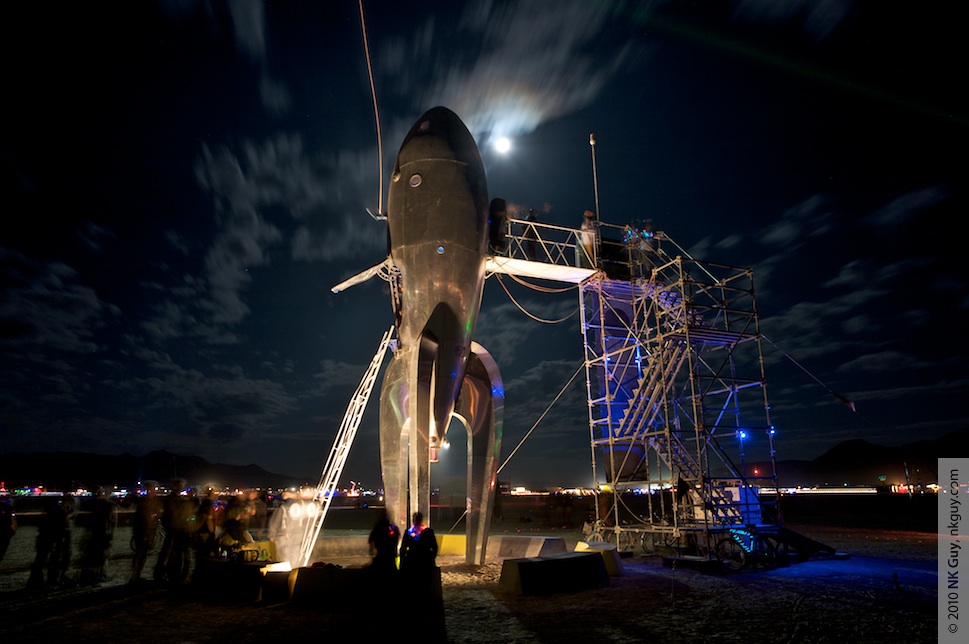
In addition, the Obscura Society consists (apparently... I've just discovered this place this morning and am still sussing it out) of local volunteers who lead related field trips and other events. Indeed, if Atlas Obscura weren't going to be enough of an Internet Timesink™ on its own, a link on the Events page to an Obscura Society San Francisco salon led me to the website of the Five Ton Crane arts collective, the builders of (among many other cool things) the Burning Man project Raygun Gothic Rocketship (to bring us back around to things that appeal to space-cadets like me), and I think Five Ton Crane's site is going to turn out to be a nontrivial timesink, too!


Thursday, January 26, 2012

If Only It Weren't Newt

The first thing you have to know is that I’m a huge space cadet myself. Born in the dawning years of the Space Age, I was a starry-eyed 9 year old when Neil Armstrong and Buzz Aldrin landed on the moon, watching every second of the televised EVA, and then immediately watching every second of the replay. I remember my dad — a NASA engineer — bringing home vacuum-formed relief maps of the Apollo landing sites, on which we would trace out moonwalkers’ progress in mechanical pencil. So you should know that there’s nothing I’d rather see than the achievement of the visionary space goals Newt Gingrich laid out in Florida on Wednesday: A permanent presence on the moon, accelerated human missions to Mars, breakthrough interplanetary propulsion technology….

Nothing, that is, except a well-functioning, just, humane, and prosperous American society here on Earth, and that’s where I fall off Newt’s high-tech sled.

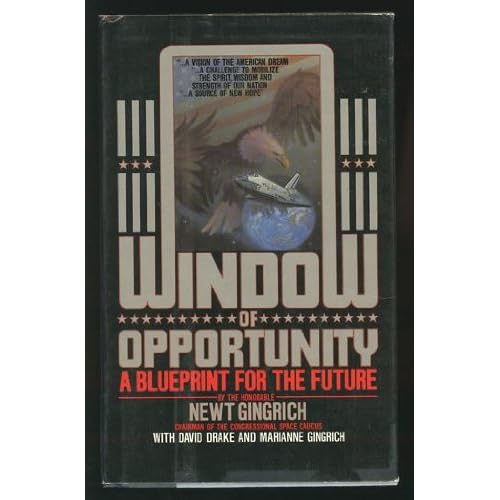
I don’t doubt the sincerity of Newt’s interest in this area: As Mother Jones reminds us, Newt’s fascination with “grandiose”1 space ideas isn’t new: As early as 1984 he sponsored a bill that would have “offered a path to statehood for future space colonies,” and the first of his many books, Window of Opportunity, focused in part on space exploration as a key to building a Gingrich-approved future. And I don’t doubt that the goals he sets out are possible: Notwithstanding the quixotically negative comments from space advocates on blogs and news stories, there’s no doubt in my mind that, given the political will and national commitment we displayed during Kennedy’s moon quest, we could, in fact, plant an initial permanent lunar base by 2020: We haven’t gotten stupider since the days of Apollo, and now we have a half century of spaceflight-related technology that wasn’t available to engineers and program managers in 1961, when JFK established an 8 ½ year deadline for the first lunar landing by humans.

What we don’t have is a world in which humans on the moon or Mars is — or should be — anywhere near anyone’s first priority. At the philosophical level, I’ve never bought the “why spend money in space when we have problems here on Earth” line of opposition to space exploration: A great nation has to be able to do more than one thing at once, and the life of a whole society shouldn’t be reduced to nothing but problem solving. But I do believe in establishing reasonable priorities, and I believe that committing large chunks of our shared resources to a project requires the project to be somehow integrated with the nation’s larger priorities. In the 50s and 60s, our priorities were, for good or ill, focused on the geopolitics of superpower competition, and the Apollo effort neatly served that priority.

But today our top priorities should… indeed, must… be focused on building a ethically and economically just society, and on rebuilding our beleaguered middle- and working-class economy… and I’m pretty sure that’s not what Gingrich has in mind. It’s possible to imagine an Apollo-level space exploration program structured in ways that would be relevant to those goals, but the very things that would make it relevant — public investment in dual-use technologies, multipurpose infrastructure, related job creation, and public education at all levels — are anathema to today’s Republicans. Gingrich might be a technocrat, but he’s a Tea-Party technocrat.

And even if Gingrich’s space proposals struck me as perfect, the fact is that everything else he stands for, and that the party he would lead into Washington stands for, would be disastrous, from my point of view. I can’t hope for a bad president just because he might be good on my one pet issue. In my previous (online) life, I used to be a regular reader/contributor at several space policy forums, and I recall my fellow regulars discussing whether Bush or Kerry would be better for advocates of space exploration. I couldn’t believe it was even a question: With war, terrorism, fundamental tax policy, and basic questions of civil liberties in the balance, I couldn’t believe that anyone, on either side, would even think of basing their vote on space policy. Show me a candidate who proposes the same space goals as Gingrich has within the framework of a humane, truly progressive agenda, and I’ll instantly vote for that candidate… but odds are good I’d’ve been voting for the humane, truly progressive agenda in any case.

And so should you.

1 Since he styles himself as an intellectual, Gingrich should know that grandiose isn’t really a compliment. Many of Gingrich’s pronouncements may in fact be grandiose, in the sense of “affectedly grand or important; pompous,” and many of his plans may be grandiose, in the sense of “more complicated or elaborate than necessary; overblown,” but… ”You keep using that word. I do not think it means what you think it means.” And don’t even get me started on people who say simplistic when they mean simple!

Wednesday, January 04, 2012

Call Off the Dogs!

Despite my somewhat dire expectations, my upgrades — from 1 to 3 Gb RAM and from Mac OSX 10.4.latest to 10.6.latest — went very smoothly; it's just Daily Life™ that seems to be tripping me up. Not that anything has gone off the rails in that regard, either, really; I'm just readapting to the post-holiday routine less efficiently than I'd hoped. Sad when it's only 4 January, and you're already a week behind on New Year's resolutions, eh?

Well, one way I hope to meet my goal of posting more often is relying on short postings and links instead of tl;dr essays1, so let me start by adding to my New Year's "intentions" a reboot of my long-dormant hobby astronomy, starting with observing as many of these events as I can.

I've already missed the Quantarid meteor shower (I did go outside last night at about the right time, but it was wicked cold, so I didn't stay long or see anything), and most of the eclipses are outside my geographic range (unless I win the lottery), but I'm going to shoot for as many of the others as I can, and I'm determined not to miss the transit of Venus.

And while I'm on space stuff, how cool is this?


1 Don't worry; I'm sure there'll be plenty of those, too!